
Finding North Charleston Residents
North Charleston has no single public roll of every person who lives here. The useful record depends on the question. A parcel card can identify a recorded owner, a deed can identify parties to a transfer, and a city directory can place a person at an address in a particular year. Those are different kinds of proof. The city crosses Charleston, Berkeley, and Dorchester counties, so the county behind the address matters before any search begins.
Start with a full street address when one is known. If the task is tied to an old name, note the likely date and any former locality label. A present North Charleston address may appear in older material as Charleston Neck, Navy Yard, Charleston County, or a parish. A name alone can produce several matches, especially when a court, deed, or property record has an ordinary surname.
- Confirm the address and determine its county through the appropriate property or parcel system.
- Use the property card for the parcel number, situs, legal description, recorded owner, and deed clue.
- Open the matching county deed index only after recording the parcel or legal-description details.
- For a dated household question, check CCPL directories and the relevant suburb section before drawing a conclusion.
- When no public index holds the identified record, ask the custodian for the existing record by address, date range, case, or permit number.
Note: A current owner, a tax mailing contact, and a listed directory occupant are separate evidence, and none alone proves a current household.
North Charleston Starts with County
North Charleston is a three-county city. Charleston County has the best documented online and historical chain, but a Berkeley or Dorchester parcel must stay in that county’s systems. The mailing city never chooses the Register of Deeds, Probate Court, property card, or Circuit Court clerk. The parcel identifier, often called a TMS, is the practical bridge between the map, tax record, and a deed.
Charleston County offers Property Record Cards and a separate Parcel Viewer. Berkeley County has its property search, while Dorchester County provides a CAMA inquiry. Each can lead to an owner and a parcel record. Each describes taxable land, not a resident list.
North Charleston Property Card Routes
For a Charleston County address, the property-card portal is the fast public route to a TMS and recorded ownership details. Its separate forms support a last-name route, address route, parcel-ID route, and sales-date route. The address form works best with a street name without the street type. The County also advises spelling numbered streets as words before trying numerals.
| Property-card input | Use | Format point |
|---|---|---|
| Last name | Find candidate owners | Partial last name is accepted; omit punctuation. |
| Street number and name | Find a situs address | Street name is required for the address route. |
| Parcel ID (TMS) | Open one known parcel | Ten digits, optionally A/B, with no punctuation. |
| Sales date | Narrow transfers | Uses its own portal route. |
A result separates current owner fields from owner-as-of-January-1 fields. That distinction is useful after a recent transfer. The card may also show a mailing address, legal description, acreage, deed book/page, sale date, and tax district. A mailing address is a notice contact, not evidence that someone lives at the parcel.
See the Charleston County Property Record Cards before using this image of the North Charleston property-search route.
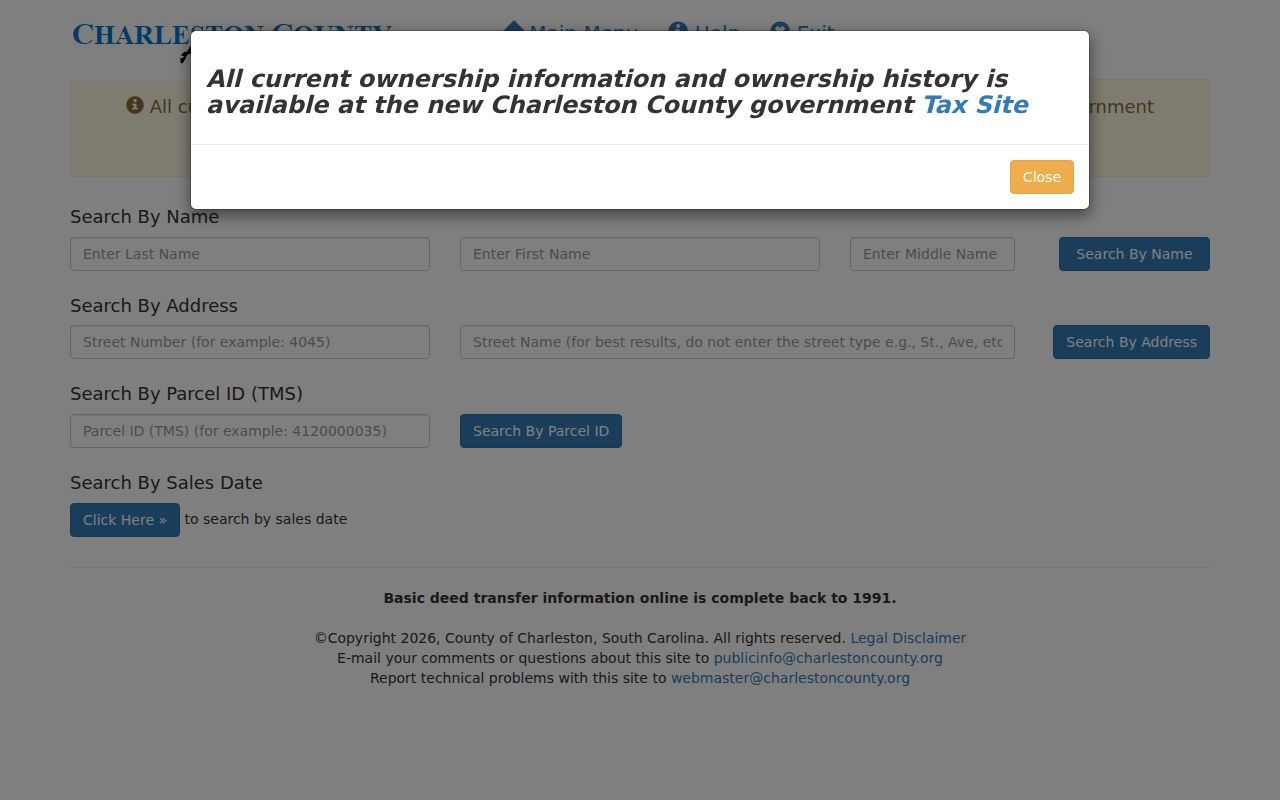
The property-card screen illustrates why the name, address, TMS, and sales-date paths should be treated as separate starting points.
North Charleston Resident Records Offices
Records offices answer narrow questions. The correct county Register of Deeds keeps the land-document trail. County assessors and auditors maintain property cards. The State Election Commission offers the individual voter route, while the county boards handle inspection questions. North Charleston’s FOIA portal is a fallback for existing municipal files such as a defined permit, code, GIS, or council record, not a search box for residents.
The City’s FOIA portal asks a requester to select department, describe the existing records sought, and choose a delivery method. Scope a request to an address, date span, project number, or case number. The South Carolina Freedom of Information Act, S.C. Code Ann. §30-4-10 et seq., governs access to nonexempt existing records and permits redactions.
North Charleston Deed Trail
Recorded deeds are strongest when the property has already been identified. Charleston County’s Register of Deeds offers name/date, type/date, book/page, tracer, and all-fields routes. A search can distinguish a grantor, the seller, from a grantee, the buyer. A tracer is a later record that points back to an earlier item, such as a satisfaction. Start with the book/page cited by a property card, then compare the legal description before moving back one transfer.
Charleston County’s online notices place deed and mortgage index data from 1978 and images from February 1997. Older work still has a documented path: physical documents from 1719 to 1960 and film or microfiche for 1960 to 2005. Berkeley’s online indexes/images begin July 1, 1983, with some deed images from January 1974. Dorchester’s online starting year was not verified, so its ROD counter and land archive remain the safe fallback.
North Charleston Current Resident Sources
Today’s directory-like sources each have a limited purpose. They should be compared, not combined into a claim that one index lists all North Charleston residents. The North Charleston resident lookup route is most useful when a single name needs confirmation against the right kind of record.
| Source | What it can support | Access boundary |
|---|---|---|
| County property card | Recorded owner, parcel, situs, mailing contact | Public county search; owner is not necessarily occupant. |
| ROD index | Parties, recording date, instrument, book/page | County coverage and image cutoffs vary. |
| SC voter records | Registration and civic geography for the identifiable voter | Self-service and statutory confidentiality limits apply. |
| Charleston court index | Party, case number, case events | Confidential and sealed material is unavailable. |
| CCPL directories | Historic listed person or address | Year, locality section, and format determine access. |
Official records are tied to named custodians and show their dates and limits. Commercial people-finder products may blend stale or mismatched data and do not replace a custodian’s record. Free public access can still require a counter visit, an appointment, a request, or a precise document reference.
North Charleston Voter Record Limits
The South Carolina voter portal provides Check My Registration, sample ballot, polling-place, and voting-history functions for the individual voter. The captured portal did not establish a public name-by-street roster. State law makes county registration records public inspection records under S.C. Code Ann. §7-5-410, but sensitive and protected information remains confidential.
A voter’s Social Security number is not open for inspection under §7-5-170. Section 7-5-321 gives eligible electors with qualifying protection orders a path to protect residence address, telephone, and email. A missing or changed online result should be checked with the voter’s own portal or the appropriate election office, rather than treated as proof someone left North Charleston.
North Charleston Court Names Need Context
For Charleston County, the Ninth Judicial Circuit Public Index supports party-name or case-number work for Circuit and Family Court material. Online filing coverage cited by the Clerk begins in 1989 for Common Pleas and 1992 for General Sessions and Family Court. A docket can show parties, roles, action names, dates, and document indicators. A similar name is not enough. Check the role, county, case type, and date.
North Charleston Municipal Court has a different purpose. Its public portal is ticket or warrant specific: traffic/criminal retrieval calls for a ticket, courtesy summons, or warrant number, driver license number, and date of birth; parking uses ticket, plate, and plate state. For an identified court file, the clerk is the fallback. Juvenile, adoption, abuse/neglect, sealed, and other confidential files remain outside public search.
North Charleston ZIPs Need Verification
ZIP codes are delivery routes, not city limits, tax districts, or courthouse boundaries. North Charleston community material identifies 29405, 29406, 29418, 29419, 29420, 29456, and 29485 as serving local users, but no ZIP alone selects a property office or deed index. A 29405 address can lead to Charleston County records. A 29406 City Hall reference does not make every 29406 address a city parcel. The edges near Summerville, Goose Creek, and Dorchester County make an exact address check especially important.
Use the official USPS ZIP Lookup to confirm a delivery address. Then use the county parcel viewer and its TMS, not the ZIP, to select the property card and Register of Deeds. Charleston County’s property-card site supports owner, street, TMS, and sales-date searches, not a documented ZIP-wide search. The Charleston map accepts address, road, parcel, or owner, likewise without a verified ZIP filter.
Check the official USPS tool before relying on the captured North Charleston residents directory image.
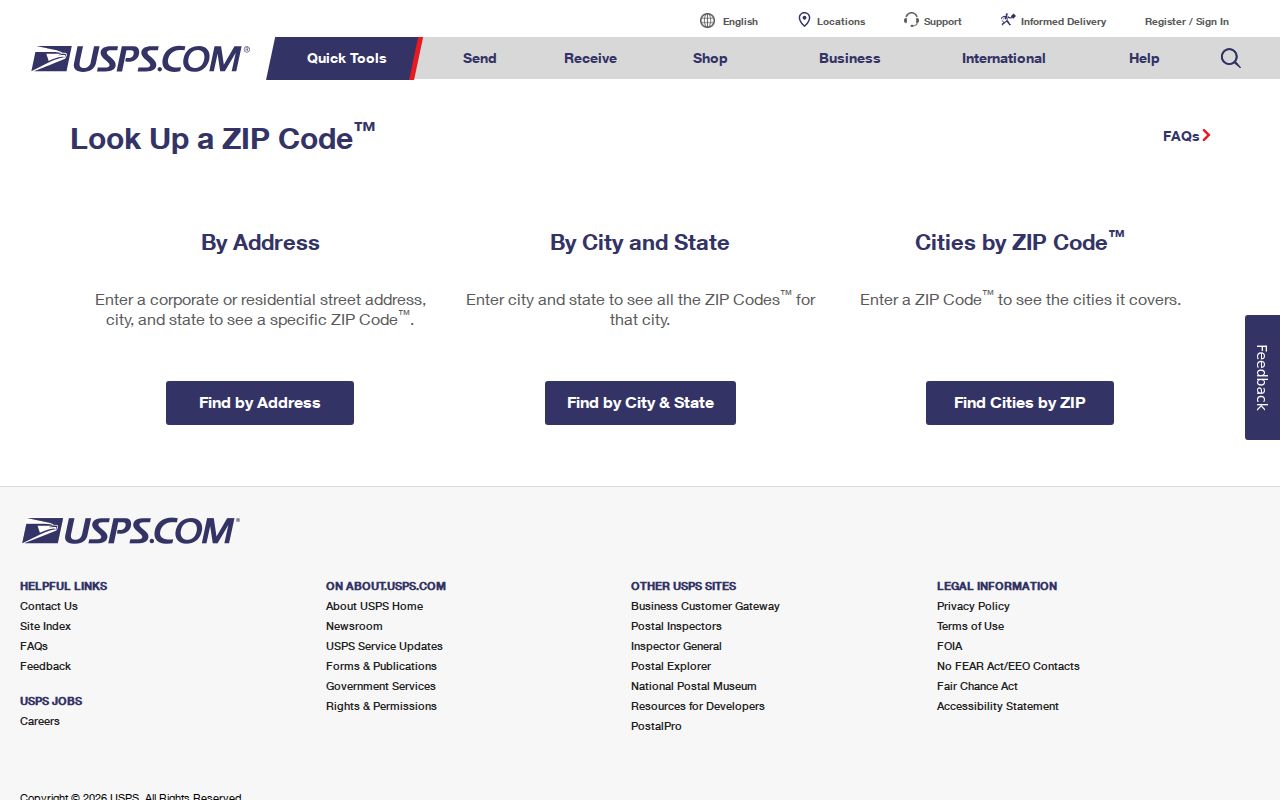
The ZIP result confirms mail routing for one address, while the parcel system confirms the record jurisdiction.
North Charleston FOIA Is a Fallback
When a public portal does not expose a known municipal record, the North Charleston FOIA route can request an existing file from the correct department. The portal lists Building, City Council, Code Enforcement, GIS, Municipal Court, Planning and Zoning, Police, Public Works, Finance, and other departments. A complete request identifies the address or case, a bounded date range, the record type, and a preferred delivery method. It should not ask the City to create a resident list or resolve an identity question.
Under S.C. Code Ann. §30-4-30, a written request receives a determination within 10 business days for records two years old or less, or 20 business days for older records. If access is granted, the stated production period is 30 calendar days after final determination, or 35 days for older records, subject to an allowed deposit. Exemptions and redactions still apply. The public counter, a county office, and CCPL or the Charleston Archive remain useful alternatives when the identified source is outside City custody.
North Charleston Vital Records in Time
South Carolina DPH is the statewide custodian for birth, death, marriage, and divorce certifications. It holds marriages from July 1, 1950 and divorce reports from July 1, 1962; an earlier marriage license belongs with the issuing county Probate Court. A divorce report is not the underlying court decree. For historical work, DPH death-index files cover 1915 to 1967, while CCPL holds selected older local death and obituary material with important geographic limits.
South Carolina law opens birth records for public viewing after 100 years and death records after 50 years. Before then, eligibility rules apply. DPH documents online, phone, in-person, and mail routes for eligible vital requests. Its documented mail search is $12, including one certified copy if located, and an eligible expedited search is $17. Confirm fees and timing with DPH before submitting an application.
Use the DPH birth-certificate instructions for current request channels before relying on the captured North Charleston residents directory image.
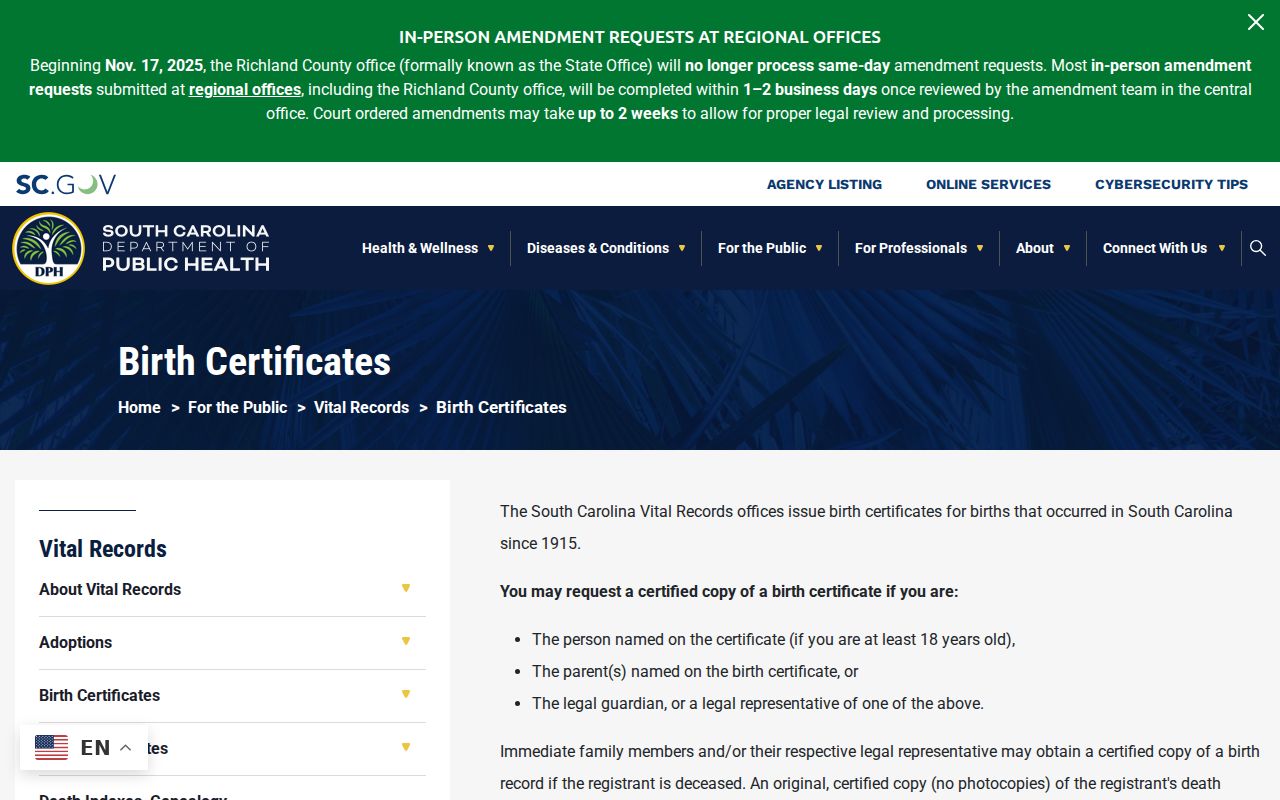
The DPH screen is a reminder that a vital-record request requires the applicable relationship, identification, payment, and record details.
North Charleston Historical Resident Directories
Charleston County Public Library’s South Carolina Room and Charleston Archive are the durable historical shelf for North Charleston. Its holdings include city directories, maps, microfilm, clipping files, and research databases. Directory coverage can be cataloged as Charleston even when it reaches North Charleston. For the 1940s and 1950s, CCPL specifically warns that Navy Base and North Charleston addresses may be in separate suburban sections.
CCPL records city-directory material from 1735 and 1782 onward in several formats. HeritageQuest offers selected runs, microfilm covers many nineteenth- and early-twentieth-century years, and original printed books include later Greater Charleston editions. Reverse or street listings appear in the exceptional 1840 volume and from 1890 onward. The fuller collection history, how an entry reads, and the publication gaps belong in the North Charleston Directory Book.
Visit CCPL City Directories to check holdings before using the library directory image.
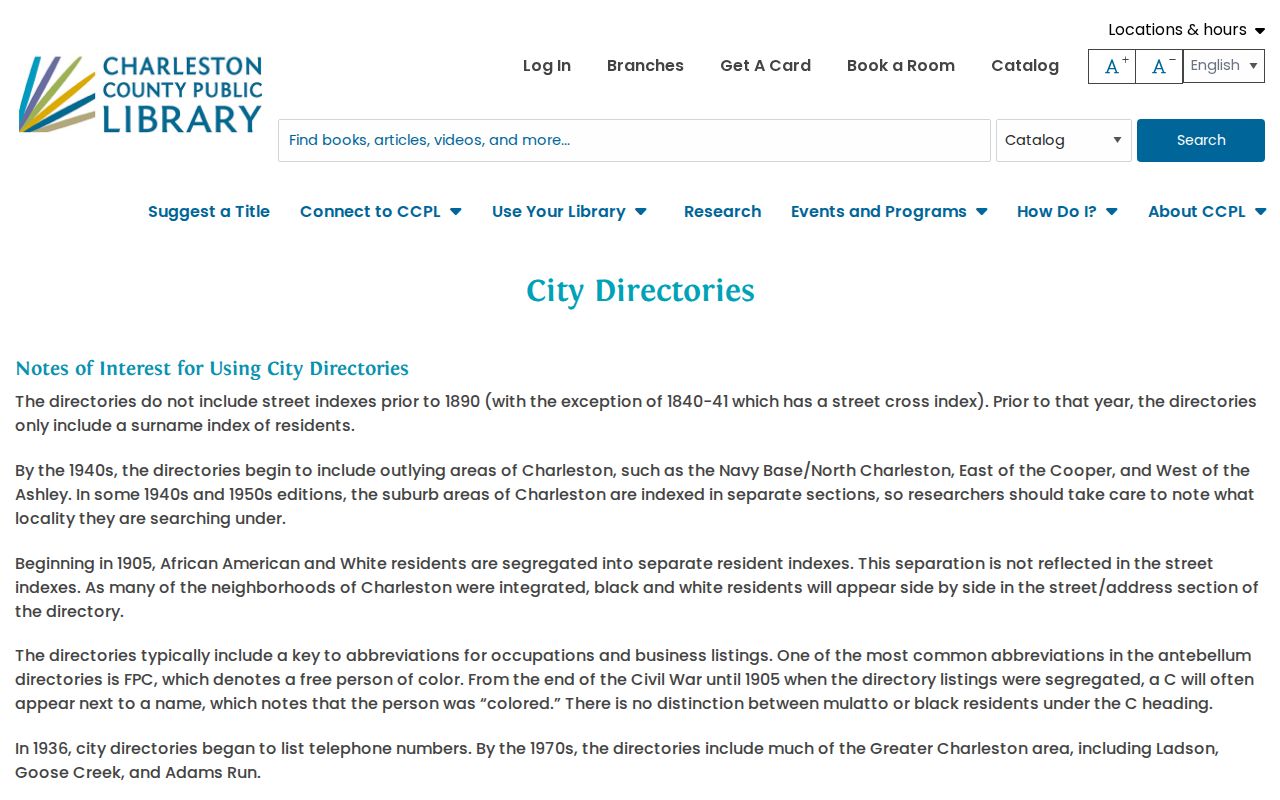
The collection listing is a finding aid, so the year, format, and local suburb section should be recorded before a name search begins.
North Charleston Records Before 1972
North Charleston incorporated in 1972, though the North Charleston name dates to a 1912 planned development near the Cooper River and Navy Yard. Older people and land records may use Charleston, Charleston Neck, Navy Yard/Base, St. Philip Parish, St. James Goose Creek Parish, or an earlier subdivision. Park Circle’s unusual planned geometry can help orient a map comparison, but a plat, legal description, and parcel evidence make the match.
Charleston County’s long deed continuity illustrates the difference between a searchable modern index and a historical record. Its paper deed books reach 1719, while the contemporary index is much newer. CCPL notes gaps in the R.L. Polk run, including 1949, 1952, 1954, 1956–57, and 1962–67. A missing entry in one of those gaps is not evidence that a household disappeared.
North Charleston Protected Addresses
Some missing address data is legitimate and must stay that way. The South Carolina Address Confidentiality Program, administered by the Attorney General under S.C. Code Ann. §16-25-130, provides eligible participants a substitute address for state and local government and court use. It does not erase older public records, but an apparent mismatch may be a safety protection rather than a records error. DMV information, sealed court material, utility accounts, and protected voter data are not public directory sources.
Lawful use. Use public records for personal, lawful research, and never use an address or record trail to stalk, harass, intimidate, or harm anyone.
Charleston County also offers a free Property Recording Alert service for names. Users enter first and last names of at least three characters and an email, then confirm that email. It can monitor name variants, but its prefix matches do not replace a title search or document review.
Review the official recording-alert route before the image below.
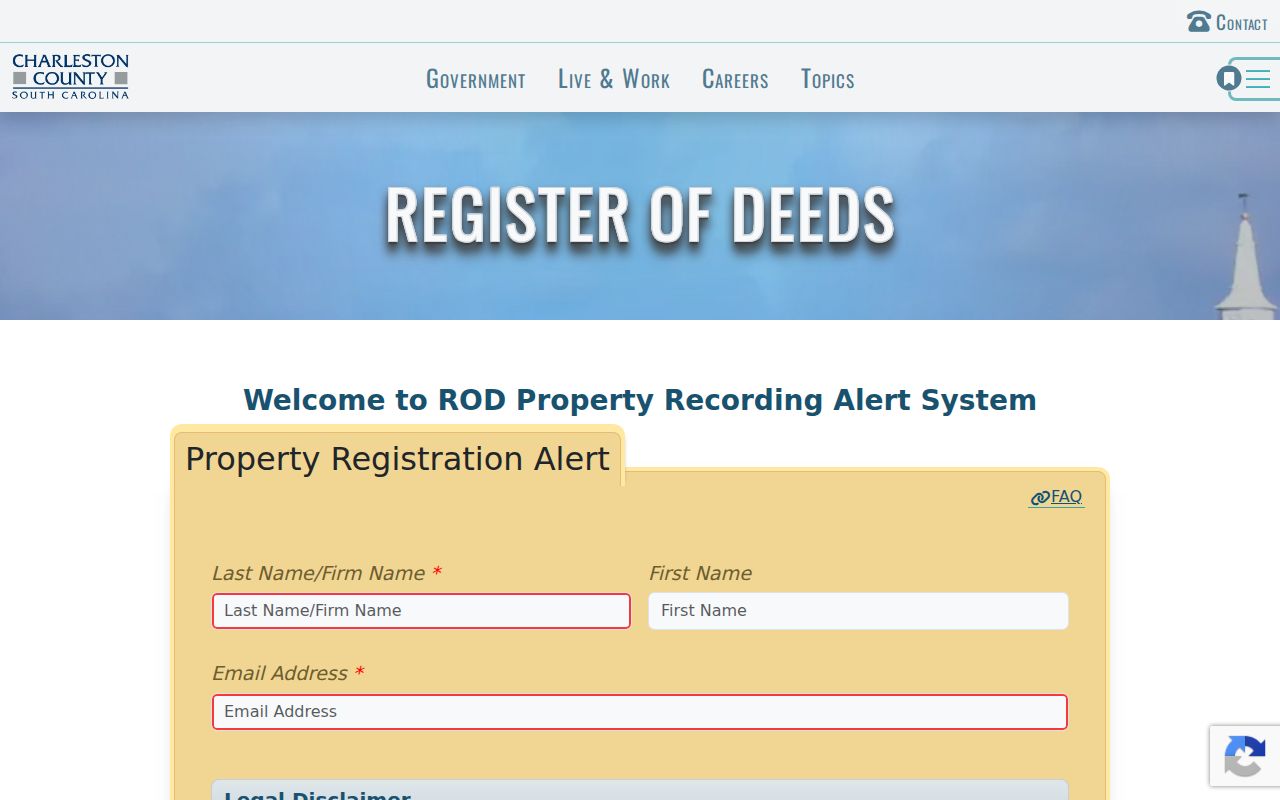
The alert service is a current county anti-fraud tool for recorded-name activity, not a substitute for county property and deed research.